Pierre Boulat
-
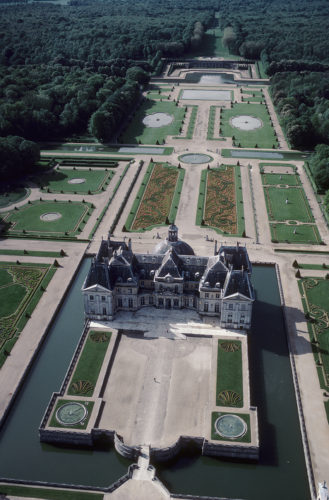 General view of the castle with its gardens designed by André Le Nôtre, like a hole in the forest.
 -
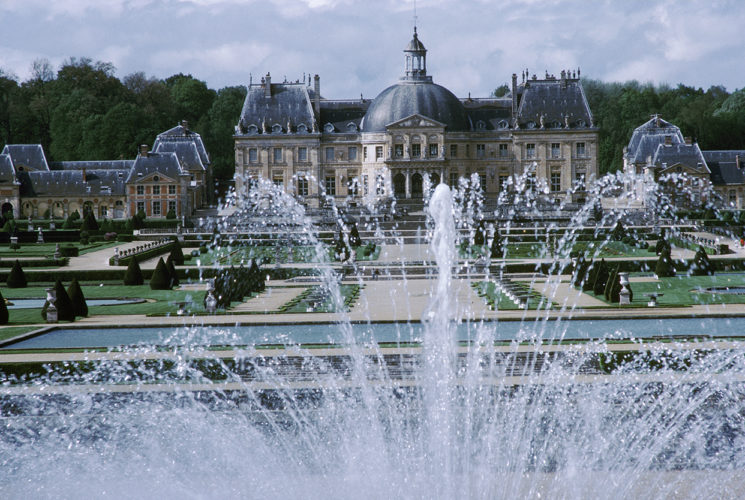 General view of the castle with its pond and water jets. The waters of Vaux le Vicomte were supplied by a 28 km aqueduct which crossed the 900 acres of the park and built at the time of Fouquet.
 -
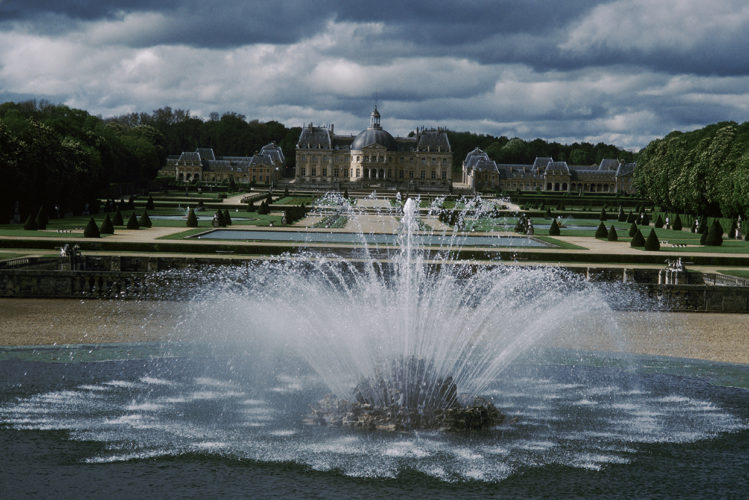 General view of the castle with its pond and water jets. The waters of Vaux le Vicomte were supplied by a 28 km aqueduct which crossed the 900 acres of the park and built at the time of Fouquet.
 -
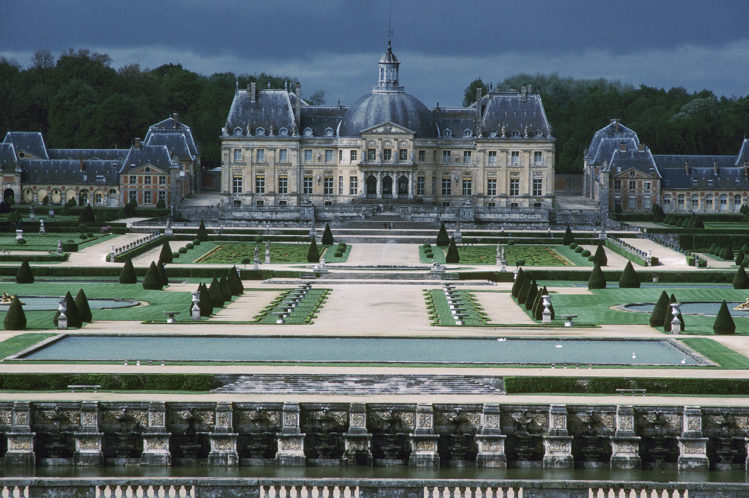 General view of the castle with its square basin in the foreground
 -
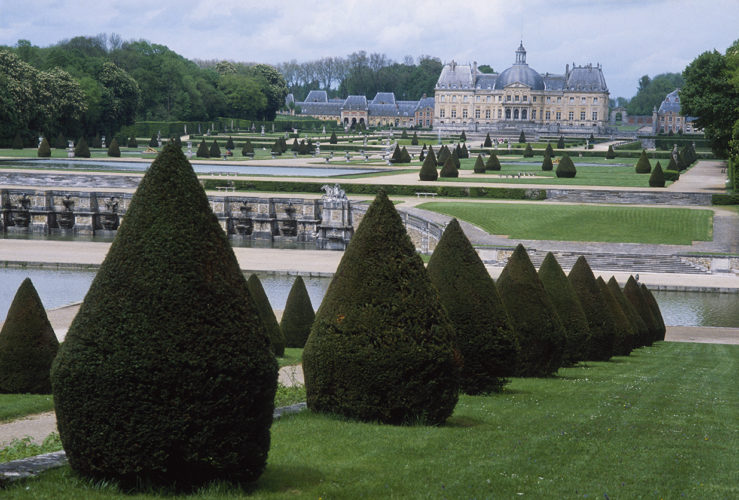 The French garden, designed by André le Nôtre and its box-trees pruned along the alleys
 -
-
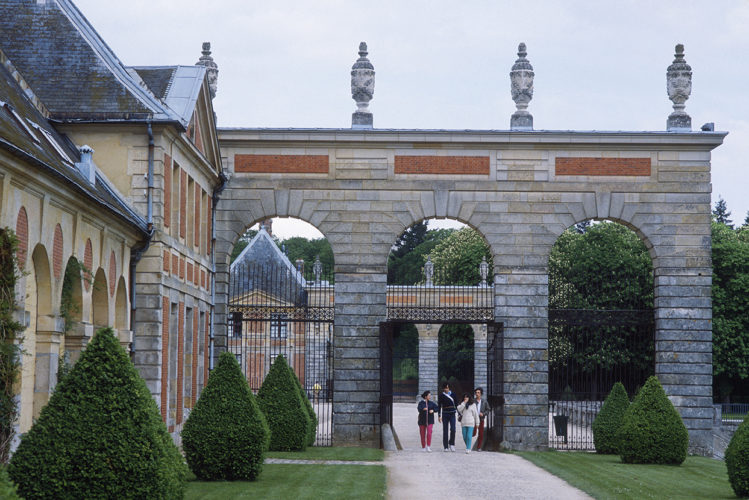 The front door to the garden
 -
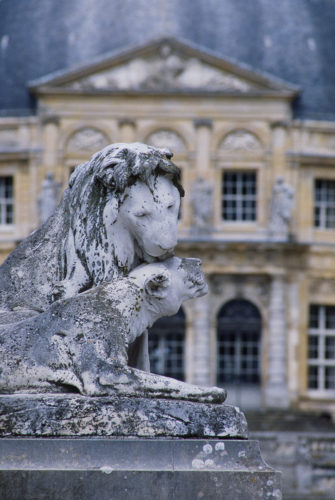
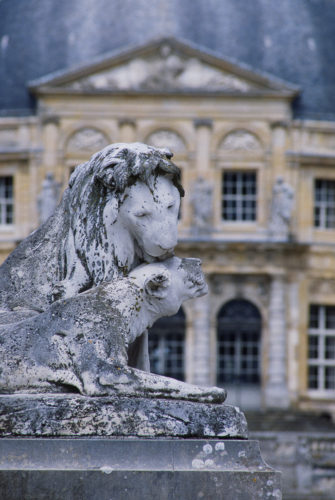 Group of sculptures by Guardet marking the main aisle and representing a lion and a lioness.
 -
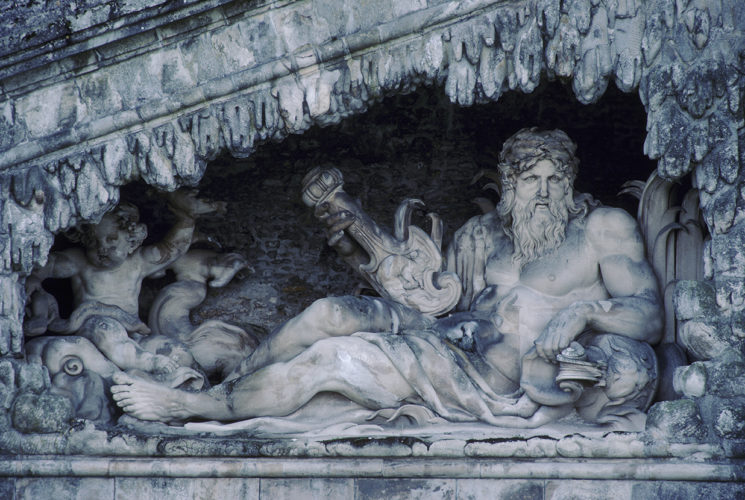
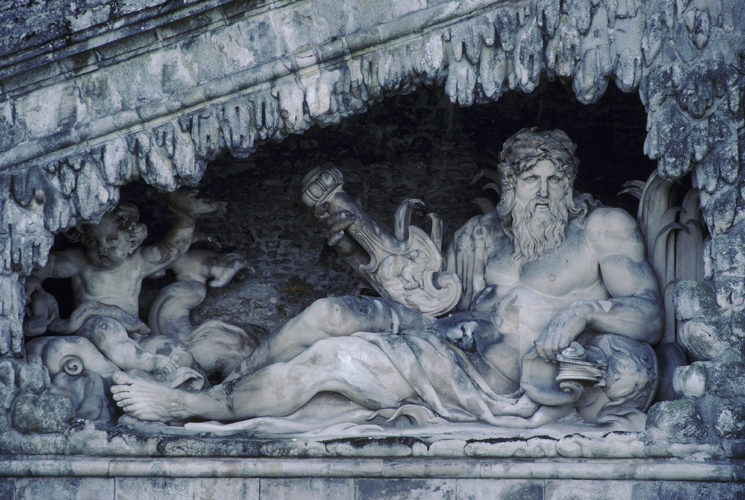 Neptune in one of the caves of the castle.
 -
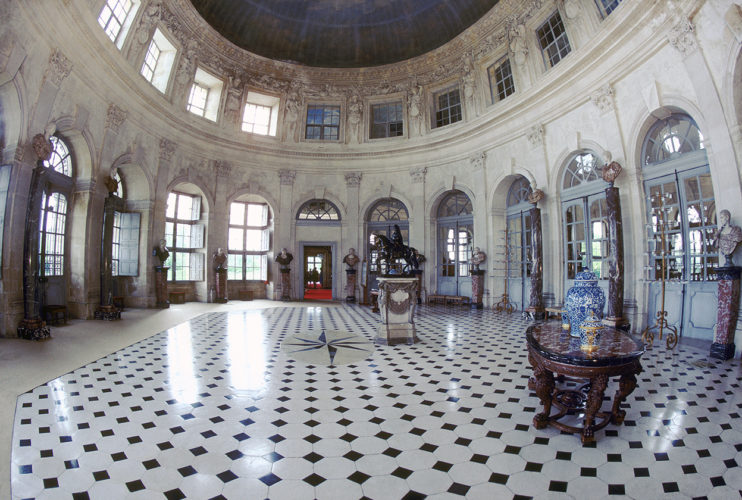
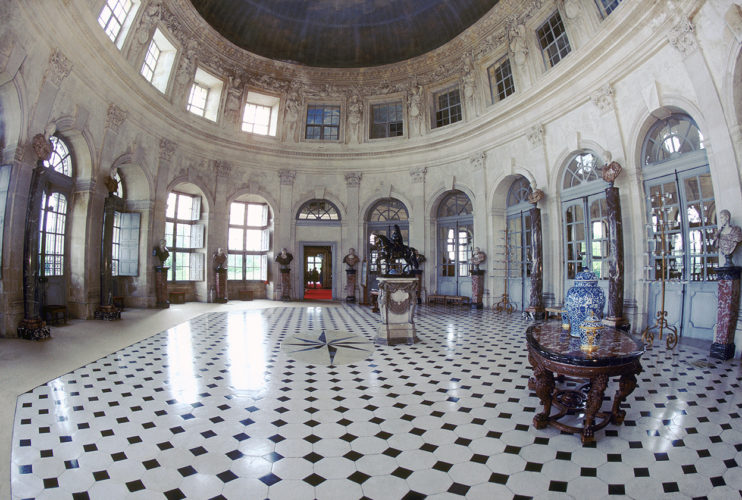 The oval-shaped Grand Salon, with its paved floor and domed ceiling, is decorated with busts of Roman figures. On one of the oval larbren tables that belonged to Madeleine Fouquet and never left the castle, two 18th century Cahn-Chi china porcelains.
 -
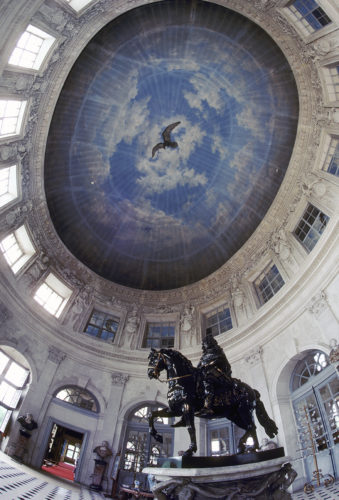
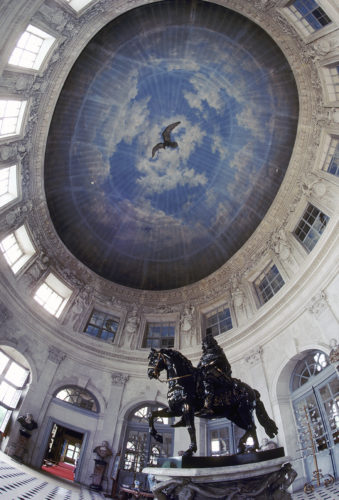 In the centre of the Grand Salon, under the dome, an equestrian statue of Louis XIV in bronze by Girardon. It had served as a model for the one on the Place Vendôme in Paris and was destroyed during the revolution.
 -
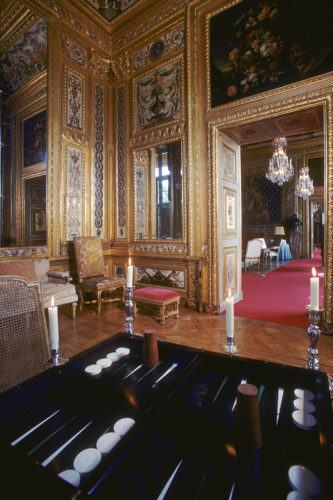 The Game Cabinet with a 17th century backgammon in the foreground.
 -
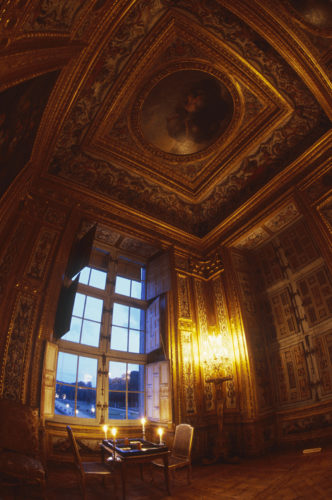 The Candlelit Games Cabinet
 -
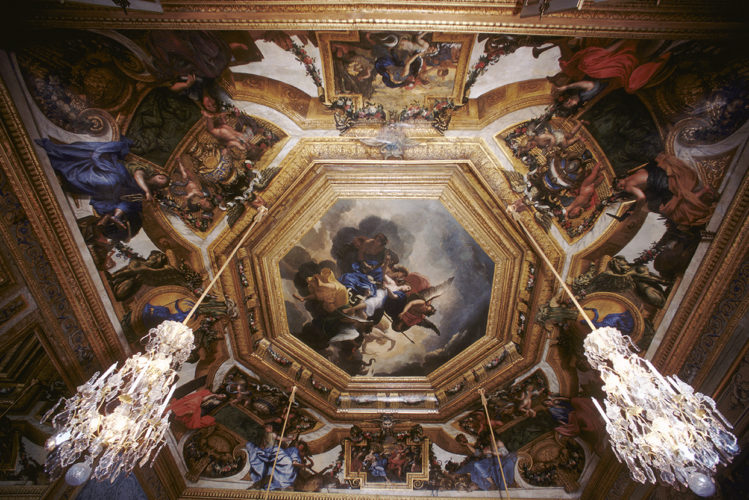 The Muses' room - detail of the ceiling decoration
 -
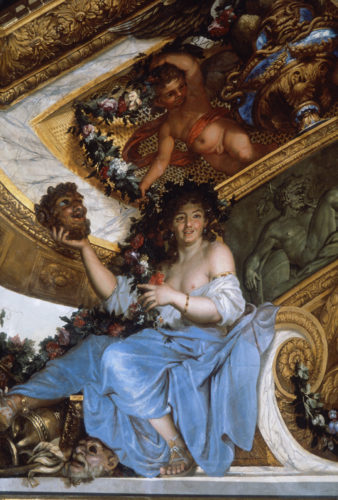 The Muses' room - Detail of a fresco painted by Le Brun showing Thalie, the Muse of Comedy, with a mask in her hand.
 -
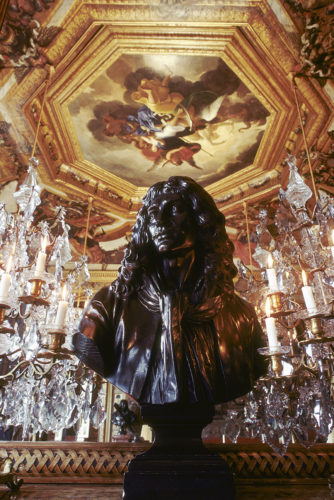
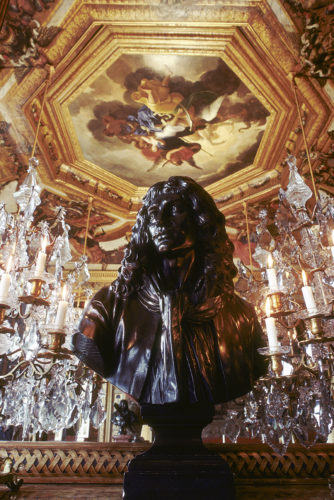 Bust of Voltaire in the The Muses' room
 -
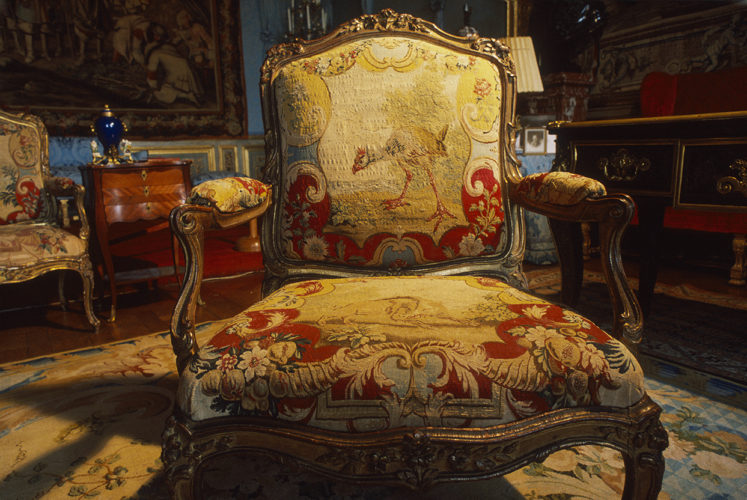 Armchair of Louis XIV covered with a watercress tapestry.
 -
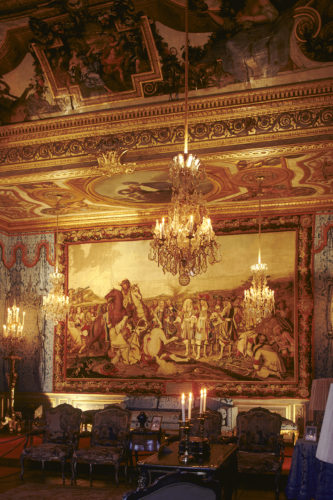 Louis XIV during the siege of Douai. This tapestry of the Goblins is part of a collection called "The History of Kings", made in the 18th century.
 -
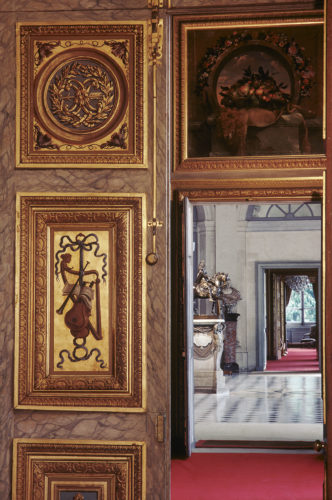 Seen from the Muses' room, it's threading its way through the rooms on the ground floor.
 -
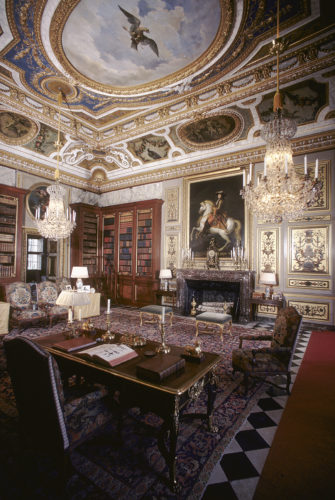 The Library with a desk designed by Levasseur in the foreground and a portrait of Louis XIV on the back wall.
 -
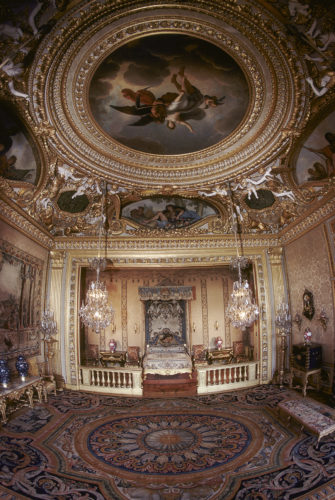 The King's bedroom The carpet on the floor was commissioned by Louis XIV from the Savonnerie des Gobelins and was only one of 93 pieces that were to cover the floor of the great gallery in the Louvre. On the walls, two tapestries telling the story of Psyche and, on each side of the bed, two consoles by Boulle. Ceiling painted by Lebrun
 -
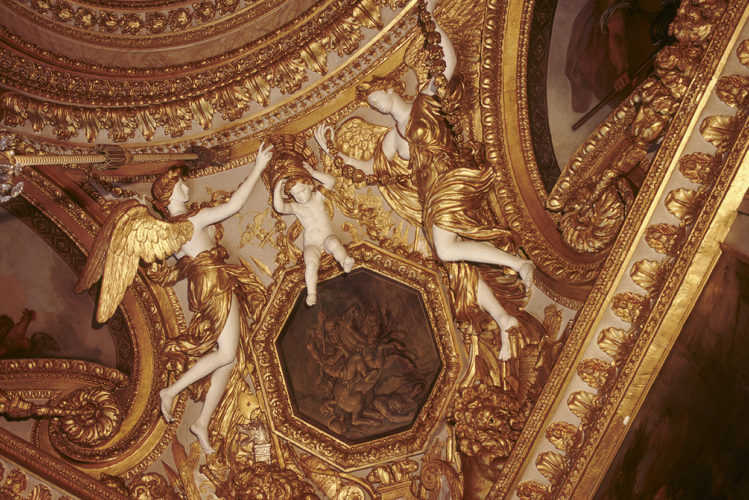 Detail of the stuccoes decorating the ceiling of the King's room
 -
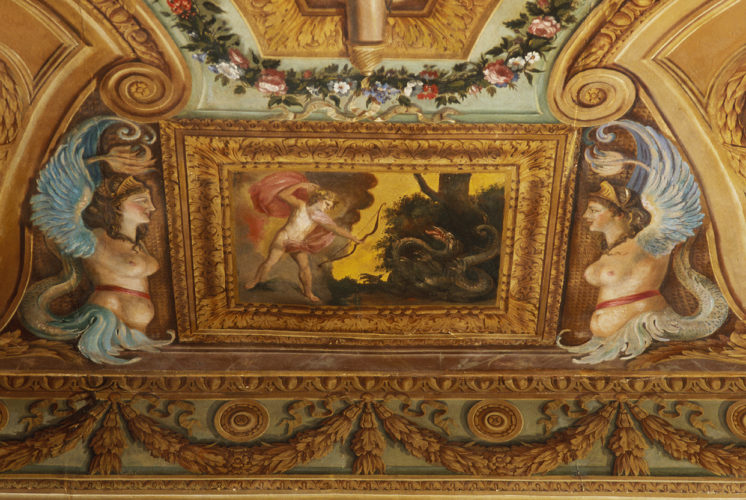 Detail of the frescoes decorating the ceiling and walls of the king's room
 -
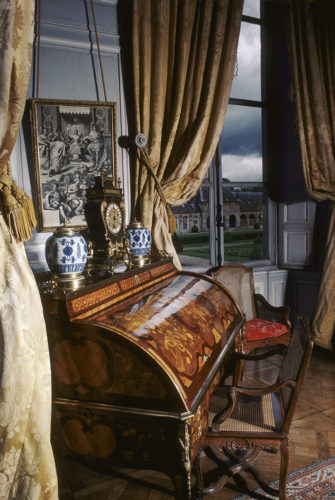 Lafontaine's room with his Louis XV cylinder secretary and signed Teuné.
 -
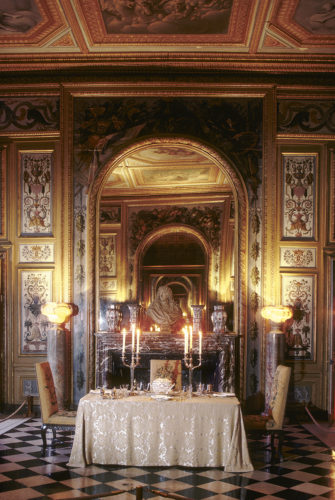 The candle-lit dining room
 -
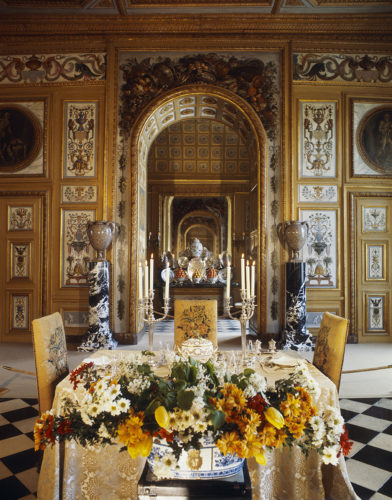 The dining room
 -
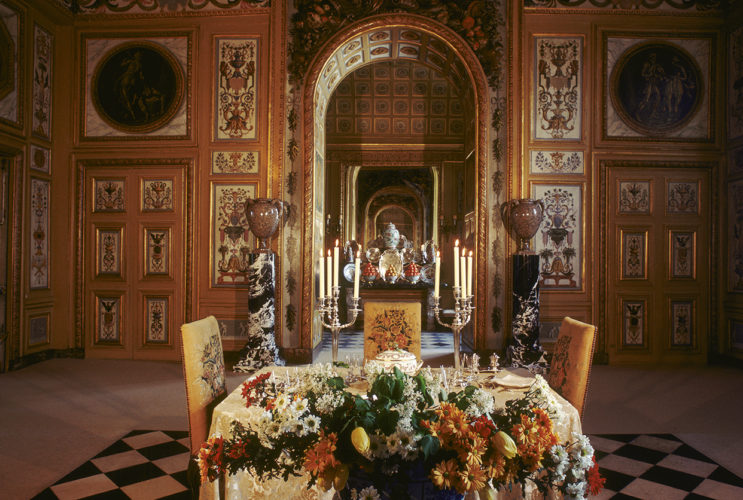 The candle-lit dining room
 -
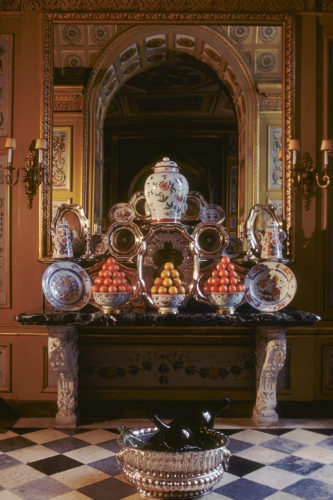 The dining room
 -
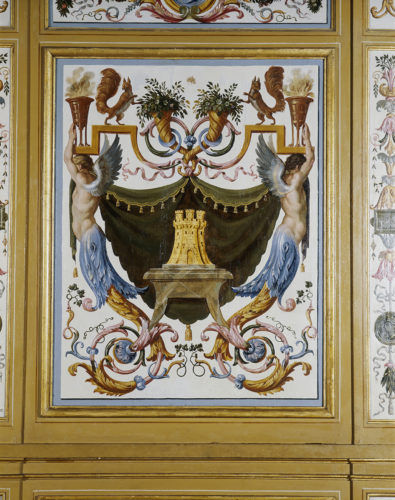 Detail of the panels on the walls of the dining room, showing Madeleine Fouquet's coat of arms and the squirrels, Nicolas Fouquet's emblem.
 -
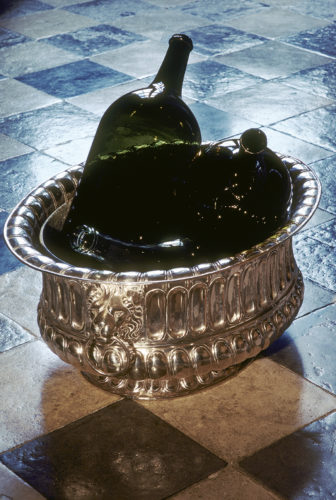 In the dining room, detail of a silver-plated copper cup used to refresh drinks. The ice at Vaux le Vicomte came from the glaciers of the Alps and was kept underground.
 -
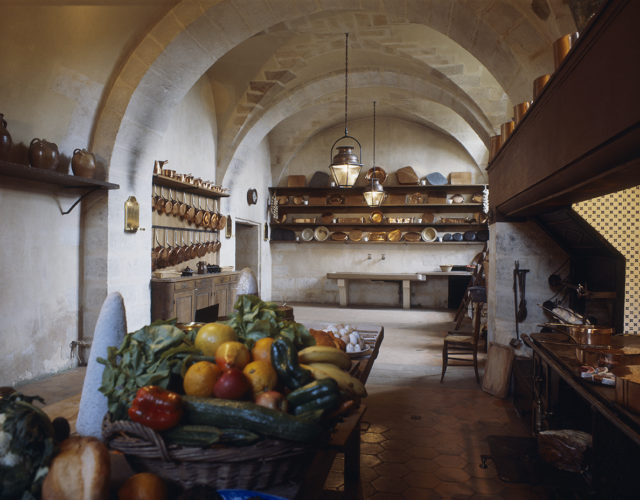 The kitchen in the basement of the castle
 -
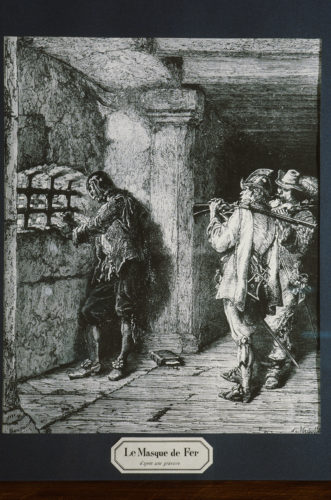 Engraving representing the Iron Mask. Some people claimed that it was NIcolas Fouquet, but no one ever really knew who the prisoner behind the mask was.
 -
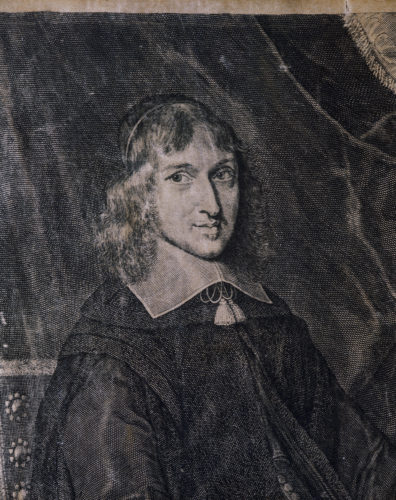 Portrait of Nicolas Fouquet
Vaux-le-Vicomte
It was supposed to be the grandest housewarming in history.
The host was Nicolas Fouquet, Superintendent of the Finances of France, the richest and most powerful subject of the young King Louis XIV. With his new castle, he was going to offer the king and the world a supreme example of what riches and power could do in the realms of beauty and taste and well-tempered magnificence.
While the castles at the time were old castles expanded from generation to generation, Vaux was built all of a piece from a unified design conceived by the noted architect Louis Le Vau. It was a huge country mansion, open and inviting, designed for entertainment on the largest possible scale. The interior had been designed and executed by Charles Le Brun who had left a touch of sparkling luxurious elegance on everything: the 250 tapestries, the painted wall panels and gilded moldings, the carved and embroidered furniture, the chandeliers, the busts of Roman emperors. From the windows and the terrace on the far side of the building, the eye could see a splendid garden of a new design, a man-made landscape, designed by André Le Nôtre in which everything, including the chateau was integrated.
On August 17, 1961, the King, the Queen and all the gratin of the court attended the fabulous inauguration. Louis XIV was impressed by the “Fête de Vaux”, as its creator had intended, but beneath the smiling exterior he knew how to maintain on all occasions, he was boiling with jealousy and rage. For some time he had been poring over the account books of the state and Jean Baptiste Colbert, who had only recently become Fouquet’s second in command, had been showing him in detail how enormous streams of public money were pouring into the superintendent’s hands.
Three weeks after the Fete, he summoned Fouquet and had him arrested and driven off to the first of the dungeons in which he was to spend the rest of his life.
Vaux, which had come fully to life for one glorious evening, was left to wither in obscurity. until 1875, when a young man bought it and spent the rest of his life restoring it. His great grand-son, count Patrice de Vogüe is now in charge of the castle
Pierre Boulat
-
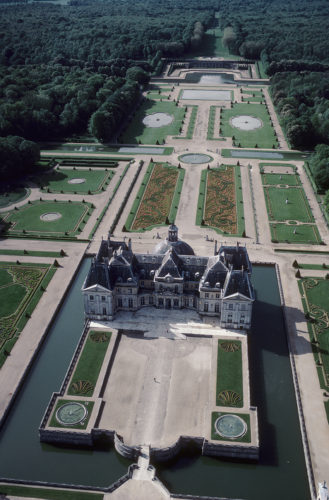 Vue d'ensemble du château avec ses jardins dessinés par André Le Nôtre, comme une trouée dans la forêt
 -
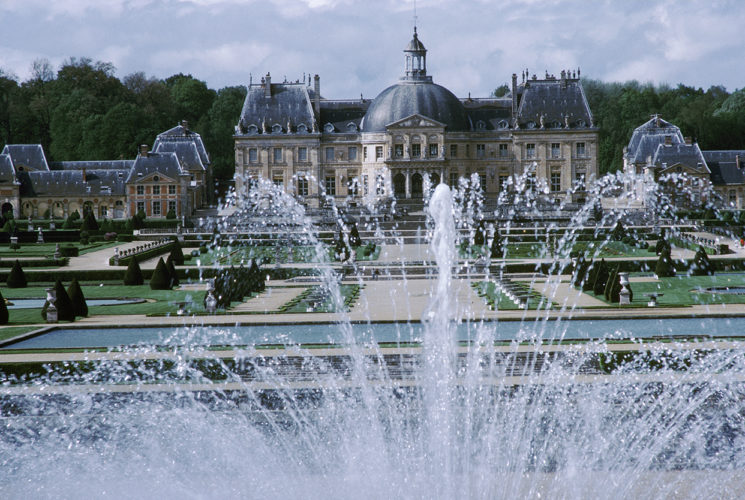 Vue d'ensemble du château avec son bassin et ses jets d'eaux. Les eaux de Vaux le Vicomte étaient fournies par un aqueduc de 28 kms qui traversait les 900 âcres du parc et construit à l'époque de Fouquet.
 -
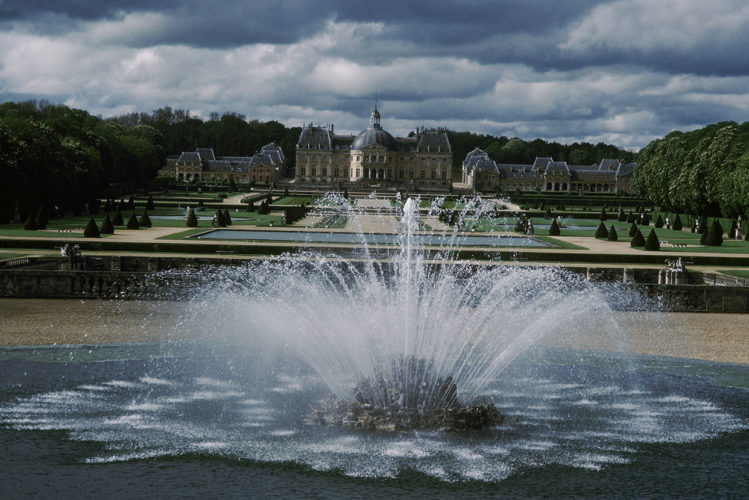 Vue d'ensemble du château avec son bassin et ses jets d'eaux. Les eaux de Vaux le Vicomte étaient fournies par un aqueduc de 28 kms qui traversait les 900 âcres du parc et construit à l'époque de Fouquet.
 -
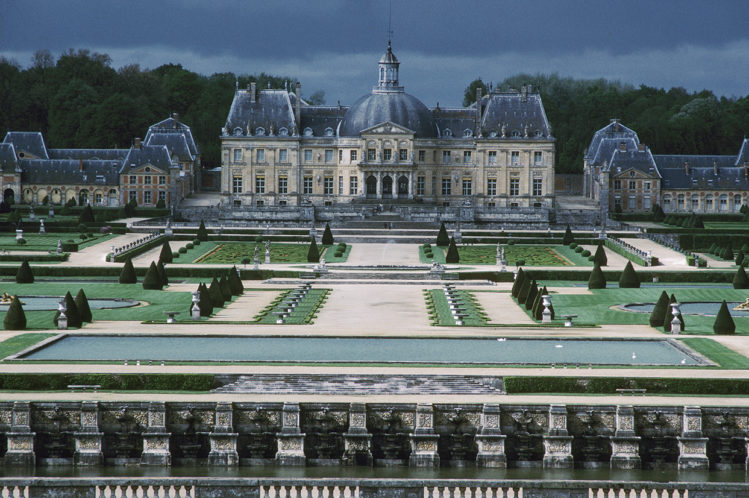 Vue d'ensemble du château avec son bassin carré au premier plan
 -
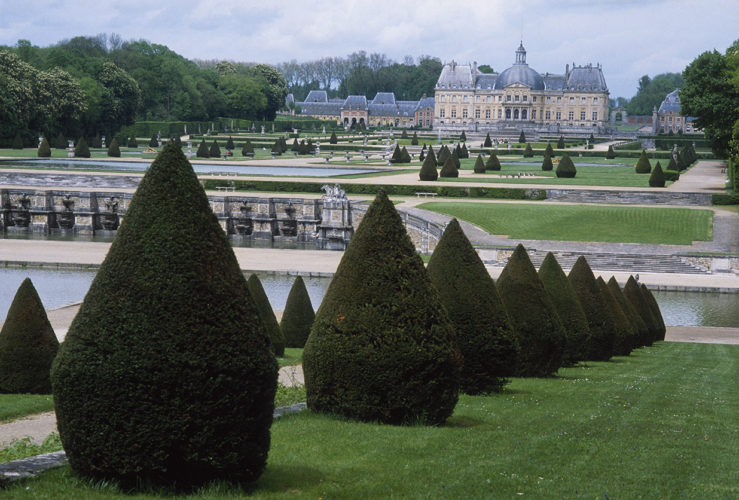 Le jardin à la française, dessiné par André le Nôtre et ses buis taillés le long des allées
 -
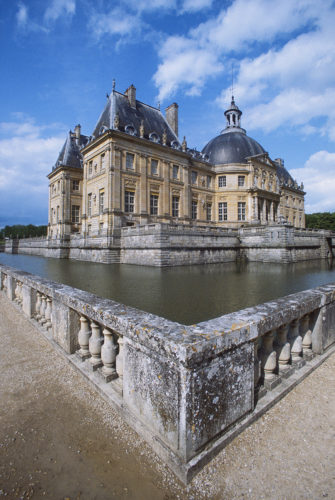
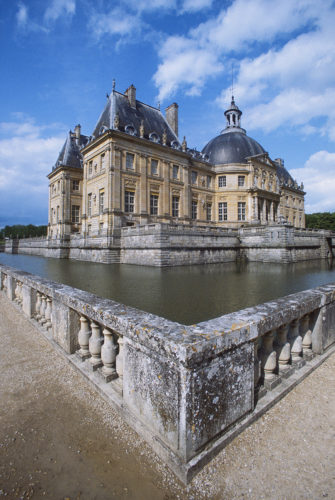 Le château repose sur une plateforme rectangulaire entourée de larges douves en eau
 -
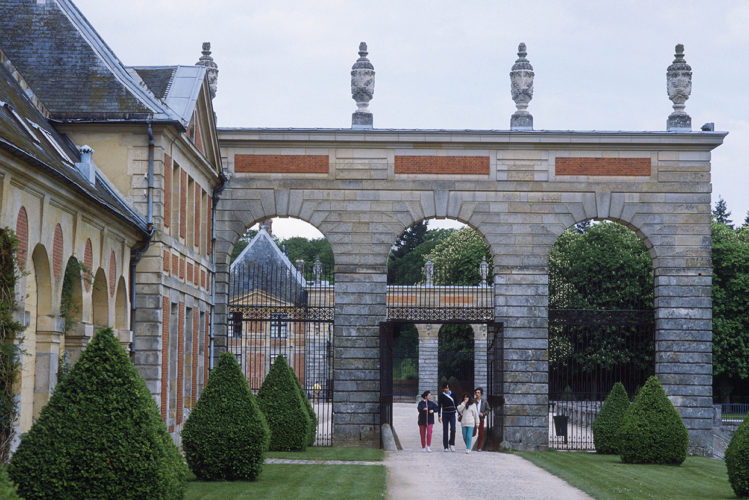 La porte d'entrée du jardin
 -
 Groupe de sculpture de Guardet marquant l'allée principale et représentant un lion et une lionne.
 -
 Neptune dans l'une des grottes du château
 -
 Le Grand Salon, de forme ovale, avec son sol pavé et son plafond en coupole est décoré de bustes de personnages romains. Sur une des tables ovales en larbren qui ont appartenues à Madeleine Fouquet et n'ont jamais quitté le château, deux porcelaines de chine Cahn-Chi du 18° siècle
 -
 Au centre du Grand Salon, sous la coupole, une statue équestre de Louis XIV en bronze par Girardon. Elle avait servi de modèle pour celle qui se trouvait sur la Place Vendôme à Paris et fut détruite pendant la révolution
 -
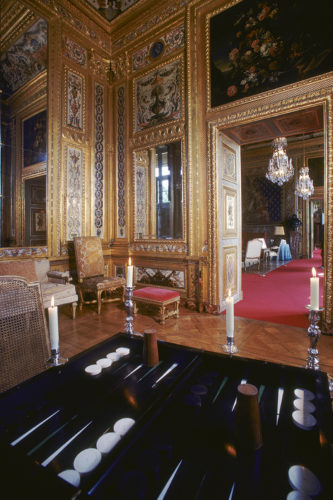 Le Cabinet des Jeux avec au premier plan un backgammon du 17° siècle
 -
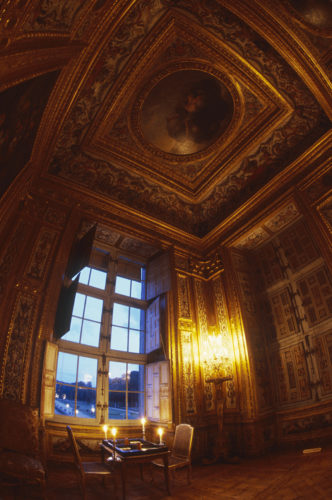 Le Cabinet des Jeux éclairé aux chandelles
 -
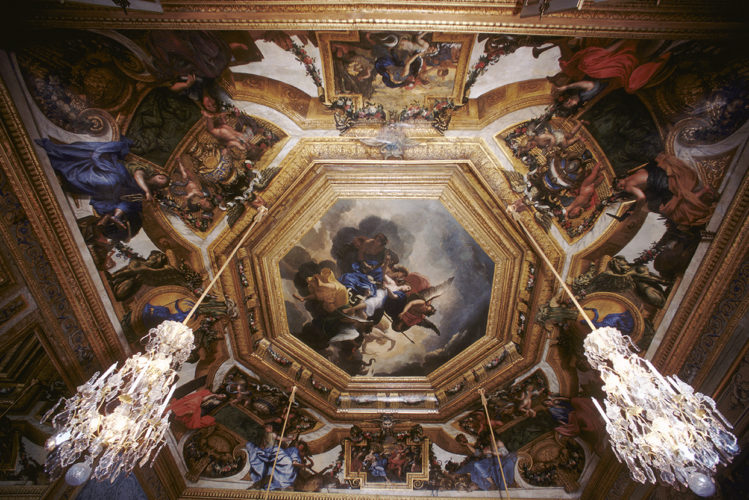 La Chambre des Muses - détail de la décoration du plafond
 -
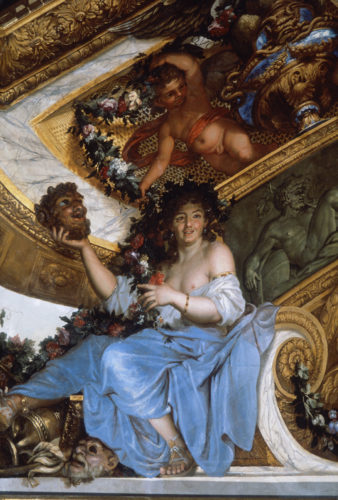 La chambre des Muses - Détail de fresque peinte par Le Brun et montrant Thalie, la Muse de la Comédie, un masque à la main.
 -
-
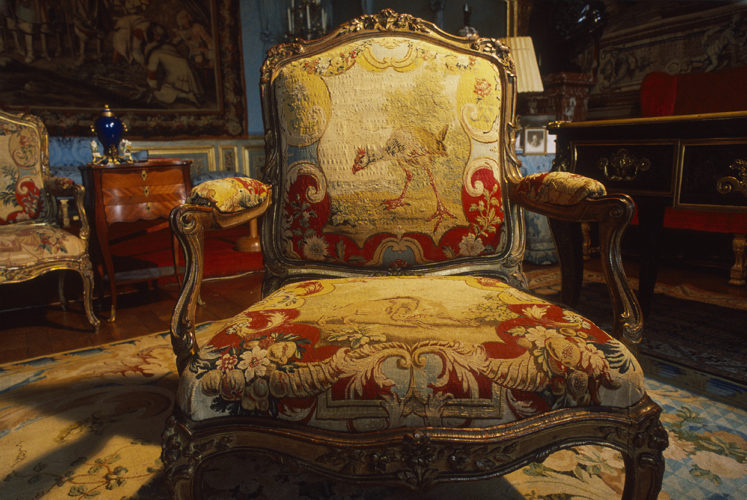 Fauteuil de Louis XIV recouvert d'une tapisserie de Cresson.
 -
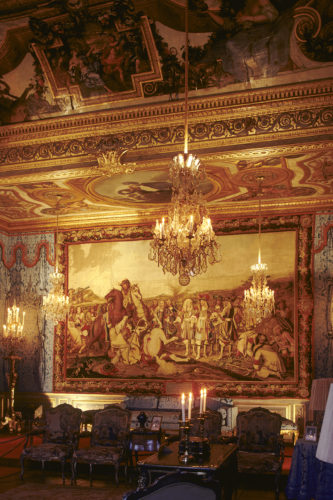 Louis XIV pendant le siège de Douai. Cette tapisserie des Gobelins fait partie d'un ensemble appelé "L'histoire des rois", réalisé au 18°
 -
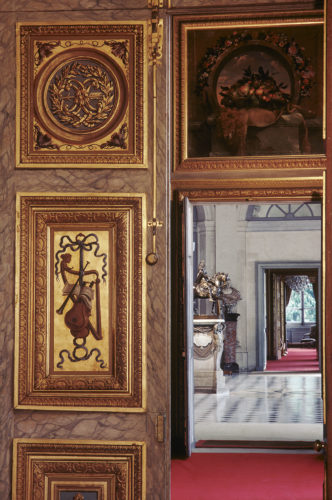 Vu depuis la chambre des Muses l'enfilade des pièces du rez-de-chaussée.
 -
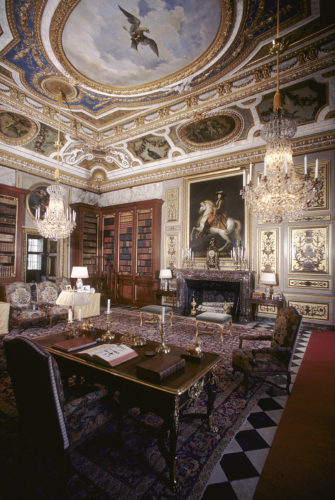 La Bibliothèque avec au premier plan un bureau dessiné par Levasseur et sur le mur du fond, un portrait de Louis XIV
 -
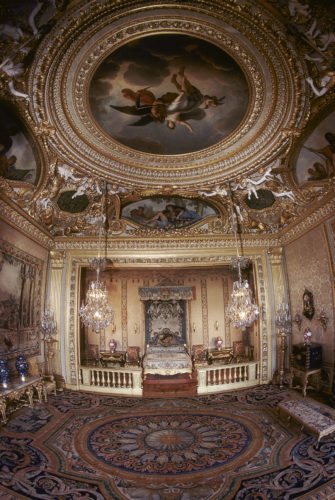 La chambre du Roi - Le tapis au sol fut commandé par Louis XIV à la Savonnerie des Gobelins et n'était qu'une des 93 pièces qui devaient recouvrir le sol de la grande galerie au Louvre. Sur les murs, deux tapisseries racontant l'histoire de Psyché et, de chaque côté du lit, deux consoles de Boulle. Plafond peint par Lebrun
 -
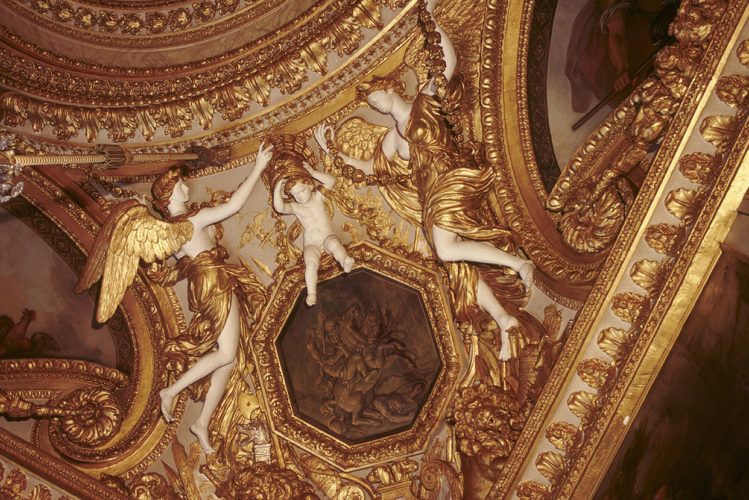 Détail du plafond des stucs ornant le plafond de la chambre du Roi
 -
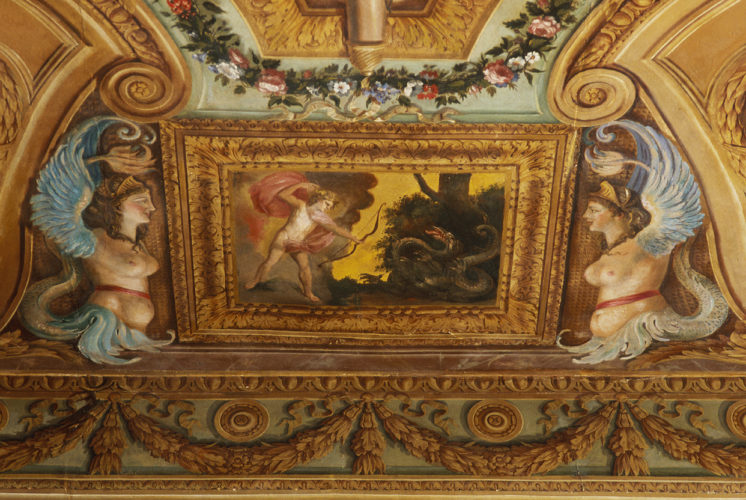 Détail des fresques ornant le plafond et les murs de la chambre du roi
 -
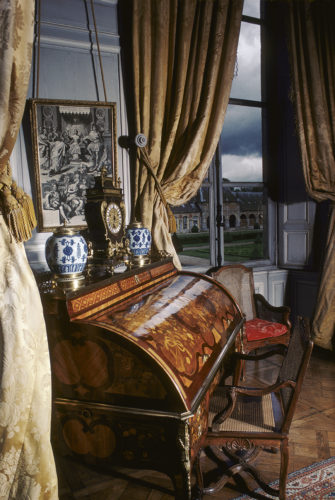 La chambre de Lafontaine avec son secrétaire à cylindre Louis XV et signé Teuné.
 -
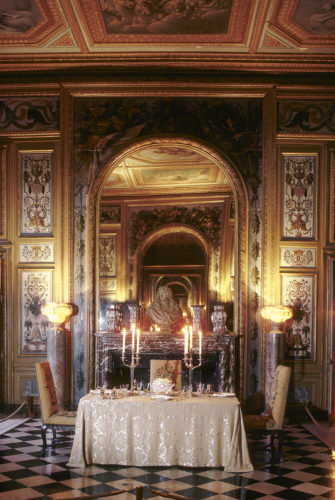 La salle à manger éclairée aux chandelles
 -
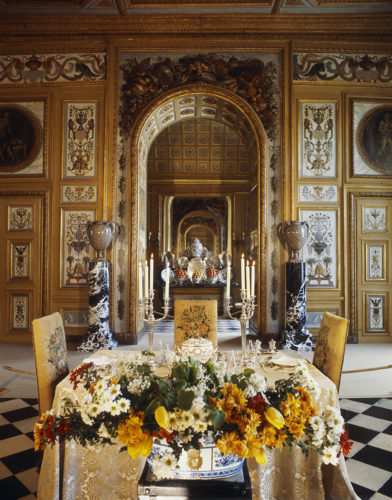 La salle à manger
 -
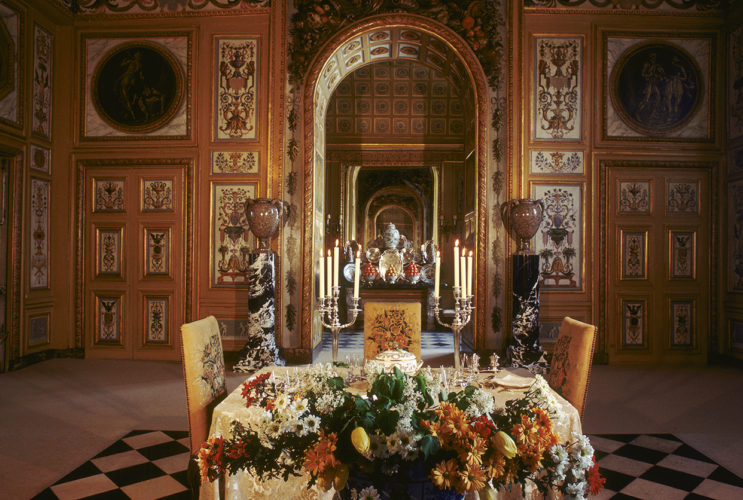 La salle à manger éclairée aux chandelles
 -
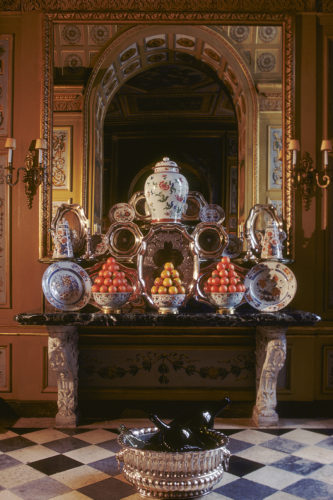 La salle à manger
 -
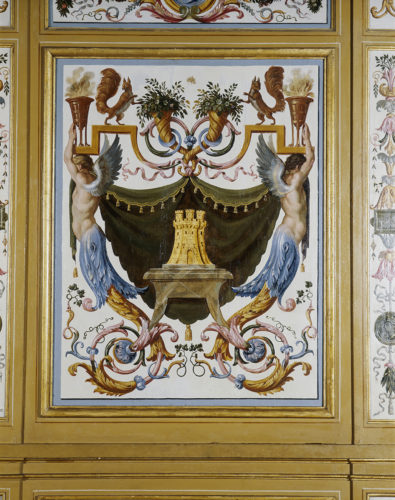 Détail des panneaux sur les murs de la salle à manger, montrant les armes de Madeleine Fouquet et les écureuils, emblème de Nicolas Fouquet.
 -
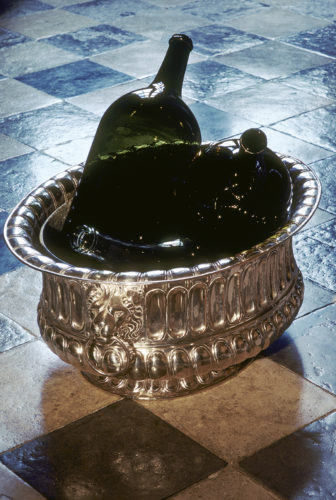 Dans la salle à manger, détail d'une coupe en cuivre argenté servant au rafraîchissement des boissons. la glace à Vaux le Vicomte provenait des glaciers des Alpes et étaient conservées sous la terre.
 -
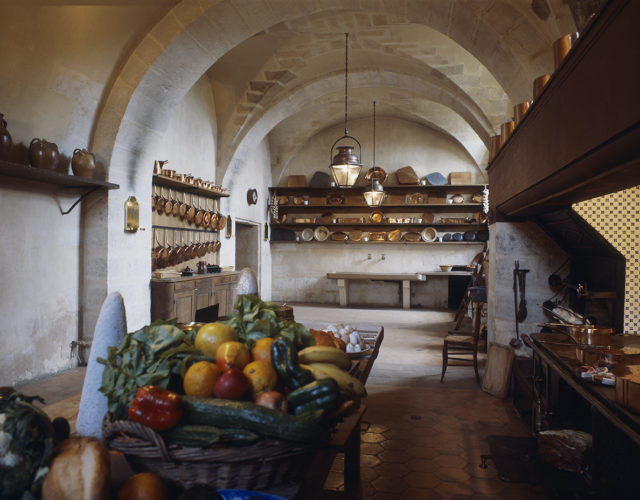 La cuisine au sous-sol du château
 -
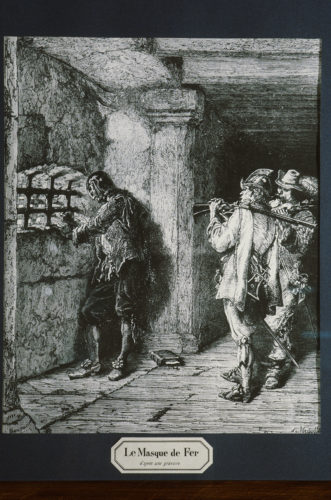 Gravure représentant le Masque de Fer. Certains ont prétendu qu'il s'agissait de NIcolas Fouquet, mais personne n'a jamais su réellement qui était le prisonnier que l'on cachait derrière le masque.
 -
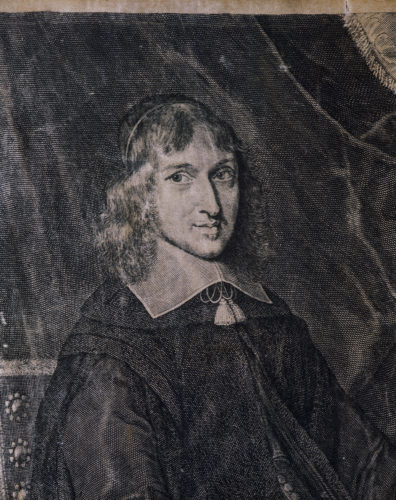 Portrait de Nicolas Fouquet
Vaux-le-Vicomte
C’était supposé être la plus grande pendaison de crémaillère de l’histoire.
L’hôte était Nicolas Fouquet, surintendant des finances de la France, le sujet le plus riche et le plus puissant du jeune roi Louis XIV. Avec son nouveau château, il allait offrir au roi et au monde un exemple suprême de ce que les richesses et le pouvoir pouvaient faire dans les domaines de la beauté, du goût et de la magnificence bien tempérée.
Alors que les châteaux de l’époque étaient de vieux châteaux agrandis de génération en génération, Vaux a été construit dans un style unifié conçu par le célèbre architecte Louis Le Vau. C’était un immense manoir de campagne, ouvert et accueillant, conçu pour le divertissement à l’échelle la plus grande possible. L’intérieur avait été conçu et exécuté par Charles Le Brun qui avait mis une touche d’élégance luxueuse et scintillante: les 250 tapisseries, les panneaux muraux peints et les moulures dorées, les meubles sculptés et brodés, les lustres, les bustes des empereurs romains. Des fenêtres et de la terrasse située de l’autre côté du bâtiment, l’œil pouvait voir un magnifique jardin d’un nouveau style, un paysage créé par l’homme, conçu par André Le Nôtre et dans lequel tout, y compris le château, était intégré.
Le 17 août 1961, le roi, la reine et tout le gratin de la cour assistèrent à la fabuleuse inauguration. Louis XIV était impressionné par la “Fête de Vaux”, comme le souhaitait son créateur, mais sous son extérieur souriant, qu’il savait maintenir en toutes occasions, il bouillait de jalousie et de rage. Depuis quelque temps, il examinait les livres de comptes de l’État et Jean Baptiste Colbert, qui était récemment devenu le commandant en second de Fouquet, lui montrait en détail à quel point d’énormes flux d’argent public tombaient entre les mains du surintendant.
Trois semaines après la fête, il convoqua Fouquet et le fit arrêter et conduire dans la forteresse de Pignerol dans les Alpes, où il devait passer le reste de sa vie.
Vaux, qui avait pleinement prit vie au cours d’une soirée glorieuse, s’affaiblissait dans l’obscurité et se voyait peu à peu dépouillé de ses trésors. En 1875, un jeune homme l’acheta et s’attacha à le restaurer jusqu’à la fin de sa vie.. C’et aujourd’hui son arrière petit-fils, le comte Patrice de Vogüe, qui en est le maitre.
